Load & runtime
Continuous power, peak events, operating hours and reserve expectations.
Define the load, protection, host communication and physical interfaces that determine whether a battery will work reliably in the real system.
Engineering begins with how the equipment operates: continuous and peak load, working hours, charger behavior, firmware, installation space and environment. These inputs are translated into an electrical, communication and mechanical direction for review.
Continuous power, peak events, operating hours and reserve expectations.
Charger or inverter settings, current limits, cut-off behavior and connectors.
Exact UPS, inverter or equipment model plus firmware and interface documents.
CAN, RS485, UART or Modbus messages and cable pin definition.
Dimensions, mounting, temperature, ingress protection and service access.
Prototype objectives, forecast quantity, destination and documentation needs.
A buildable battery specification connects energy, protection, communication and packaging rather than treating them as separate add-ons.
Cell platform, series/parallel arrangement, capacity and current path.
Protection thresholds, balancing, sensing, contactor logic and monitoring.
Host protocol, firmware behavior, cable mapping and fault-state handling.
Enclosure, mounting, cooling direction, connectors and maintainability.
Functional checks, charge/discharge testing and application compatibility review.
Approved BOM, drawings, labels, settings and quality checkpoints.
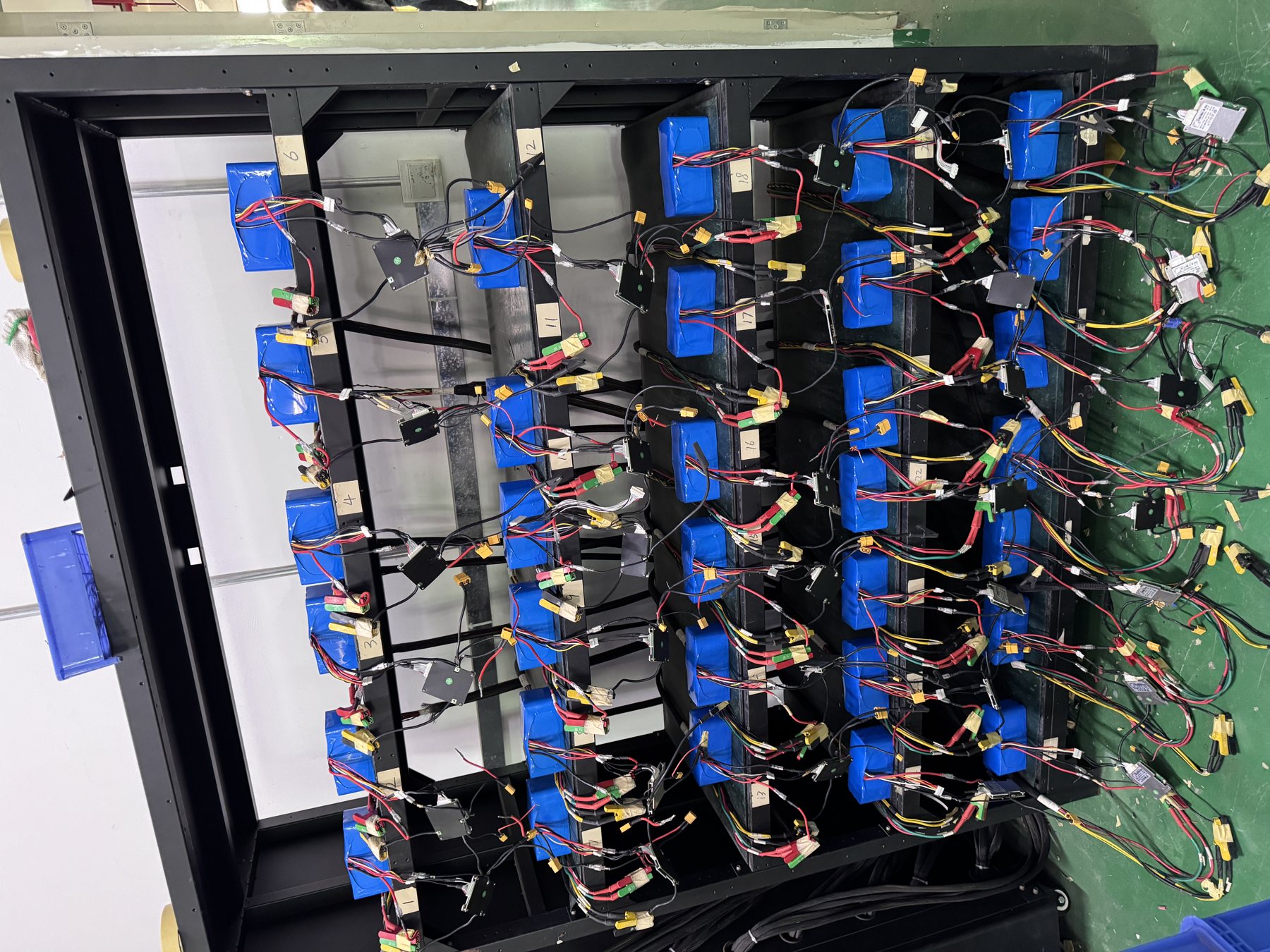
The battery and host device must agree on operating limits, communication and fault behavior. Provide the exact equipment model and firmware so the interface can be reviewed.